
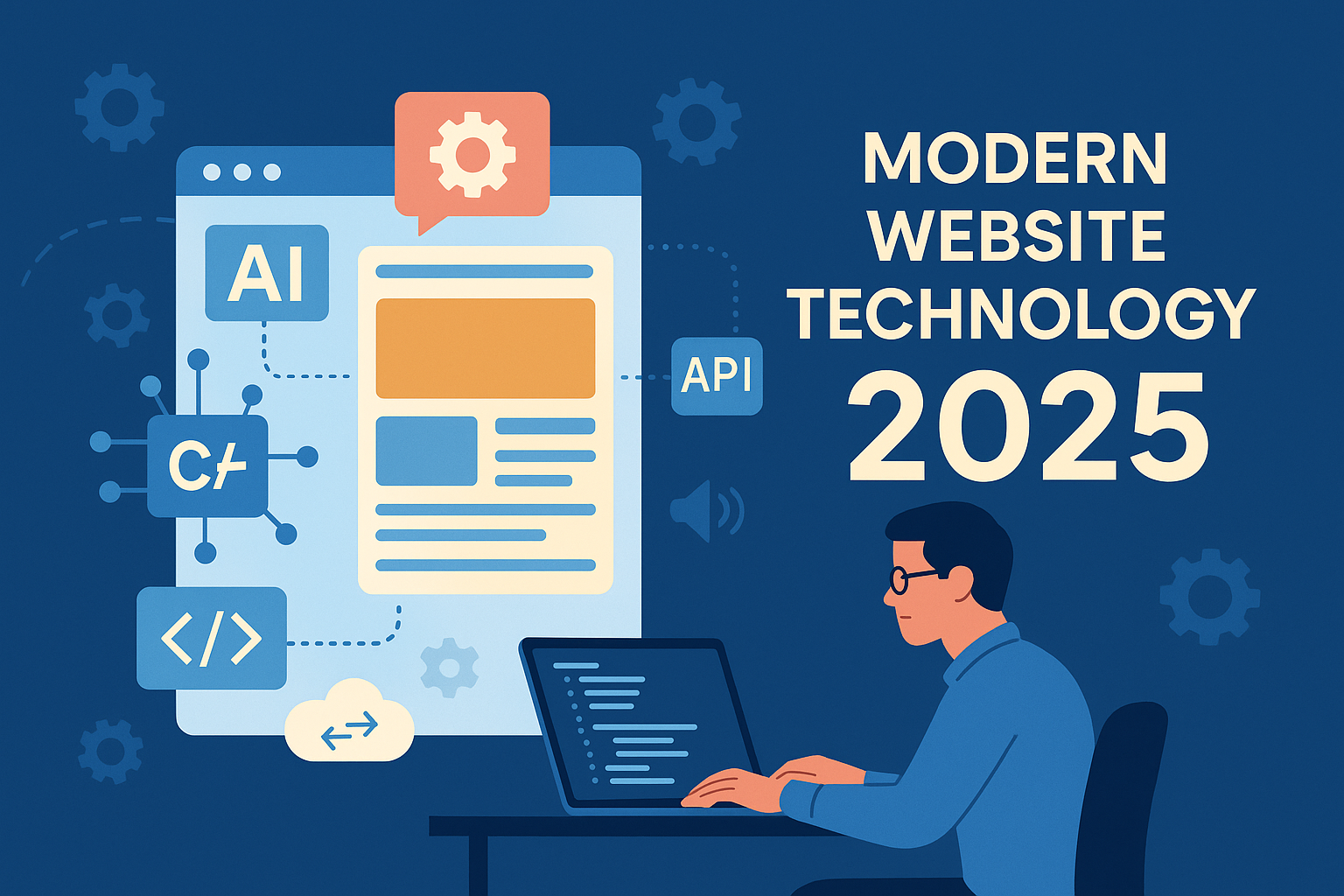
The world of web development is undergoing a major transformation. What once required bulky stacks, long deployment cycles, and manual oversight is now being reshaped by smarter tools, leaner architectures, and AI-driven workflows. As we approach 2025, staying ahead means embracing innovation — from headless CMS to AI-powered code generation.
In this post, we explore the most significant upgrades shaping the modern web and why businesses and developers must adapt to stay competitive.

🔧 Key Technology Upgrades in 2025 Web Development
AI-Powered Development & Smart Automation
- Artificial Intelligence (AI) and Machine Learning (ML) are increasingly embedded throughout the web-development lifecycle. From code generation and optimization to predictive user experiences, AI is no longer a buzzword — it’s a core capability. American Chase+2WP Engine+2
- Tools like code-assistants and AI-powered debuggers help developers write cleaner, faster, and more efficient code. This reduces the time spent on boilerplate or repetitive tasks, freeing developers to focus on architecture and business logic. WP Engine+1
- On the user side — websites can now deliver personalized content based on user behavior, making the UX dynamic and tailored rather than static. American Chase+1
Headless CMS, API-First & Modular Architectures
- The shift toward headless CMS and API-first design means content and frontend are decoupled. This offers tremendous flexibility — content can be reused across web, mobile, and other platforms. Strapi+2Digital Silk+2
- Combined with microservices or modular backend architectures, this approach allows teams to iterate, update, or scale parts of their applications independently — an essential upgrade over monolithic, rigid legacy stacks. Homepage+1
Progressive Web Apps (PWAs) & Performance-First Experiences
- Progressive Web Apps (PWAs) — delivering near-native app performance while running in a browser — are increasingly becoming standard. They support offline functionality, fast load times, push notifications, and improved reliability across devices. Medium+2MDS+2
- For many businesses, PWAs offer the best of web and mobile without the overhead of native app development. brillicaservices.com+1
High-Performance Web with WebAssembly & Advanced Frontend Tech
- Technologies like WebAssembly (Wasm) are enabling developers to run near-native speed code directly in the browser — ideal for web apps requiring high computational power (e.g. video editing, 3D rendering, games, data visualization). Medium+1
- On the frontend, contemporary frameworks (like React, Vue.js, Svelte, etc.) and component-based architectures enable faster load times, better maintainability, and smoother user experiences. roadmap.sh+1
Voice Search, Accessibility, and Inclusive Design
- As voice-activated devices proliferate, optimizing for voice search is becoming a key requirement. Websites now need to support conversational, natural-language queries and structured content for better discoverability. monkeyads.in+1
- Alongside voice, accessibility and inclusive design (responsiveness, readability, dark mode support, mobile-first design) remain vital — ensuring that websites perform well for all users regardless of device or ability. Bloom Agency+1
Serverless, Edge & Scalable Backend Infrastructure
- Backend architectures are evolving with more adoption of serverless, edge computing, and cloud-native models. This means better scalability, reduced infrastructure overhead, and improved performance — especially for traffic spikes or global audiences. Homepage+1
- For enterprises or high-traffic platforms, these modern backends offer robust, flexible, and cost-effective alternatives to traditional server setups. BrowserStack+1
✅ What This Means for Developers and Businesses
- Faster Time-to-Market & Reduced Overhead: With AI-assisted development, headless architectures, and serverless backends, teams can build and deploy websites much faster without sacrificing quality.
- Better User Experience & Engagement: Personalized content, PWAs, voice search optimization, and high-performance frontends lead to higher user satisfaction, longer sessions, and better conversions.
- Future-Proof and Scalable Infrastructure: Modular, API-first, cloud-native and serverless systems ensure your website/application can easily evolve, scale or integrate new features over time.
- Inclusive and Accessible Web: Embracing accessibility, voice interfaces, performance optimizations makes websites usable and welcoming to a broader audience — a growing expectation from users and regulators alike.
🚀 Actionable Recommendations — How to Upgrade Your Website Now
If you’re building or upgrading a website today, consider the following:
- Use a headless CMS + API-first approach (e.g. decoupling backend content from frontend) to keep flexibility.
- Build as a PWA to deliver app-like experience — fast load times, offline capabilities, and responsiveness across devices.
- Integrate AI tools (for code generation, personalization, content suggestion) to optimize development and UX efficiency.
- Leverage modern frontend frameworks and WebAssembly where high performance is required.
- Prioritize performance, accessibility, voice search support, and mobile-first design from the start — not as an afterthought.
- Adopt serverless or edge-based backend infrastructure if scalability, global reach or cost-efficiency matters.
Conclusion
The web is no longer just static pages and simple forms. With technologies like AI, PWAs, headless CMS, WebAssembly, and serverless backends — 2025 marks a turning point in how websites are built, delivered, and experienced.
For developers and businesses willing to evolve, the payoff is enormous: faster launch times, better performance, richer user experiences, and scalable, future-proof systems. The key is to stay informed, stay flexible, and embrace these changes thoughtfully.